
EMC Training, FCC Equipment Authorization & Compliance Updates
This month’s Washington Laboratories update gives you an early look at a new Washington Laboratories Academy EMC Training Course coming this October with Bruce Archambeault, Ph.D. (EMC Consultant • IEEE Fellow).
We also highlight an upcoming Power Line Interference Workshop presented by Michael Martin of RFI Services, along with updates on FCC equipment authorization requirements, measurement guidance for testing above 95 GHz, and EMC requirements for industrial, scientific, and medical equipment targeting the Australian market.
For manufacturers and product developers, these topics reinforce the value of practical engineering education, early compliance planning, current test methods, and coordinated technical documentation throughout the product lifecycle.
In This Issue
- Coming Soon: EMC Training with Bruce Archambeault — October 27–28
- Industry Training Spotlight: Power Line Interference Workshop
- FCC Equipment Authorization Changes: What Manufacturers Should Know
- Testing Above 95 GHz: FCC Updates Sub-THz Measurement Guidance
- Australia Updates EMC Requirements for Industrial, Scientific & Medical Equipment
- Resource Library
- Technical Compliance & Testing Support
Coming Soon: Washington Laboratories Academy EMC Training Course

Washington Laboratories Academy is planning a new two-day EMC training course for October 27–28, 2026 in Raleigh, North Carolina, featuring Bruce Archambeault, Ph.D. (EMC Consultant • IEEE Fellow).
Bruce is currently developing the course program, which will focus on practical EMC engineering and real-world approaches to EMC design, measurement, troubleshooting, and compliance.
The current program plan also includes a half-day session with Mike Violette on Testing and Certification Essentials, with final agenda details still being confirmed.
EMC Training Course — Coming Soon October 27–28, 2026 Raleigh, North Carolina |
Course description, final agenda, registration details, pricing, and additional event information are still being finalized. Updates will be posted on the Washington Laboratories event page as they become available.
Interested in attending? Sign up now and we’ll let you know when registration opens and additional course details are available.
Notify Me When Registration Opens
Submitting the interest form does not register you for the course. We’ll contact you when registration becomes available.
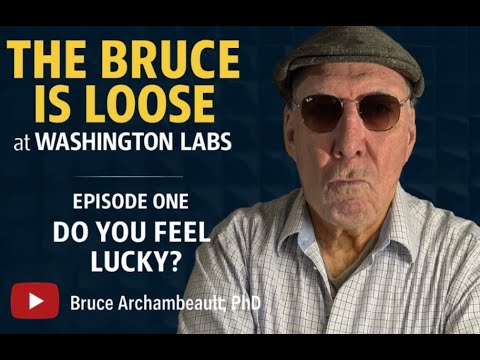
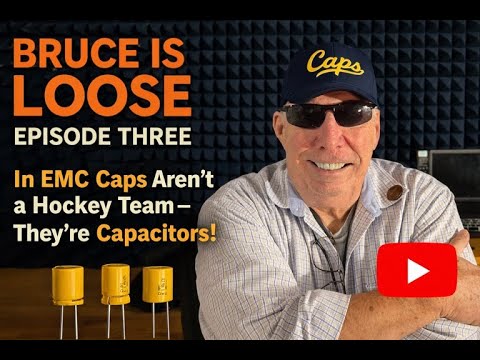
Get to Know Bruce: “The Bruce Is Loose”
While the October program comes together, catch up on Washington Laboratories’ growing EMC video series featuring Bruce’s practical—and memorable—approach to EMC engineering.
|
|
|


Industry Training Spotlight: Power Line Interference Workshop
Washington Laboratories is pleased to help spread the word about an upcoming Power Line Interference Workshop presented by Michael Martin of RFI Services, a specialist in power line interference detection and remediation.
Power Line Interference Workshop September 21–22, 2026 Pigeon Forge, Tennessee |
The training is designed for those involved in solving Power Line Radio Frequency Interference (RFI) complaints. The workshop combines classroom demonstrations with technical and practical explanations based on hands-on field experience, with the goal of reducing the time and expense involved in locating the causes of interference complaints.
Participants will also have an opportunity to locate actual power line interference sources while seeing a variety of methods and equipment demonstrated in the field.
Source: RFI Services. Workshop information and registration are provided directly by RFI Services. Visit RFI Services.

FCC Equipment Authorization Changes: What Manufacturers Should Know
The Federal Communications Commission adopted new equipment authorization rules on July 22, 2026, aimed at strengthening restrictions associated with equipment on the FCC Covered List. The action, released as FCC 26-50, expands the Commission’s restrictions beyond certain finished products to address devices incorporating specified components produced by Covered List entities.
The FCC describes the action as closing a component-level loophole in its equipment authorization rules. The new requirements target devices incorporating certain logic-bearing hardware components produced by Covered List entities when those devices seek a new FCC equipment authorization.
The FCC also adopted requirements for e-commerce platforms to display FCC IDs when marketing or selling FCC-certified devices. In a related Further Notice of Proposed Rulemaking, the Commission is considering additional changes involving supply-chain disclosures, equipment modifications, the Supplier’s Declaration of Conformity process, importation, and marketing requirements.
The Laboratory Perspective
For product developers, this is another reason to treat regulatory compliance as a design-stage activity rather than something addressed only when the finished product arrives at the test laboratory.
Component selection, radio modules, embedded processors, hardware architecture, suppliers, firmware, and final product configuration can affect the regulatory path long before formal emissions testing begins. A product may perform well during laboratory testing yet still encounter authorization issues if the underlying hardware or supply chain does not meet current FCC requirements.
Before Testing Begins
- Review critical electronic components and radio modules early in the design cycle.
- Maintain clear supplier, model, hardware, firmware, and component documentation.
- Confirm that the configuration submitted for testing represents the product intended for authorization and sale.
- Discuss unusual modules, components, or product architectures with the compliance team before final certification testing.
- Keep testing, certification, supply-chain, and product-development teams aligned when hardware changes occur.
Early coordination between manufacturers, laboratories, and certification professionals can help identify potential issues before they result in redesigns, additional testing, or delays in the equipment authorization process.
Learn About FCC Testing & Certification →
Discuss Your Testing Requirements
Source: Federal Communications Commission, FCC Adopts Rules to Strengthen Rules Governing Dangerous Gear, July 22, 2026; Third Report and Order and Third Further Notice of Proposed Rulemaking, FCC 26-50, ET Docket No. 21-232. View FCC News Release (PDF).

Testing Above 95 GHz: FCC Updates Sub-THz Measurement Guidance
As wireless and sensing technologies continue moving into higher-frequency applications, test methodology becomes an increasingly important part of product development and regulatory compliance.
The FCC’s Office of Engineering and Technology has updated KDB Publication 800303, which provides guidance for manufacturers and test laboratories performing radiated-emission measurements on devices operating above 95 GHz.
The June 26, 2026 revision replaces the original version of the Sub-THz Emission Measurement Guidance and adds additional guidance to Section 3.2. The publication addresses measurement considerations for millimeter-wave and sub-terahertz devices operating beyond the frequency range addressed by many traditional compliance measurement procedures.
Why Sub-THz Testing Is Different
Measurements at extremely high frequencies can introduce challenges that may be less significant at lower frequencies. Test distance, antenna alignment, measurement geometry, instrumentation, system calibration, equipment-under-test positioning, and environmental conditions can all become increasingly important as wavelengths become shorter.
For emerging technologies, understanding how a device will be measured can be nearly as important as understanding the applicable emissions limit.
The Laboratory Perspective
Manufacturers developing products operating in the millimeter-wave and sub-THz spectrum should consider measurement methodology early in development rather than waiting until final compliance testing.
Early discussions with the laboratory can help clarify the applicable FCC guidance, anticipated measurement setup, equipment capabilities, test distances, product operating modes, and any special considerations needed to produce repeatable and defensible results.
Washington Laboratories previously covered the FCC’s development of guidance for this emerging measurement area. The continued evolution of KDB 800303 demonstrates how test procedures can develop alongside new technologies.
Read WL’s Sub-Terahertz Test Guidance Article →
Source: Federal Communications Commission, Office of Engineering and Technology Knowledge Database, Publication 800303, Sub-THz Emission Measurement Guidance. View FCC KDB Publication 800303.

Australia Updates EMC Requirements for Industrial, Scientific & Medical Equipment
Manufacturers of industrial, scientific, and medical electrical equipment targeting Australia should review the latest EMC standards applicable to their products.
AS/NZS CISPR 11:2024 is the current Australian/New Zealand adoption of CISPR 11 for industrial, scientific, and medical equipment. The standard addresses radio-frequency disturbance characteristics, including limits and methods of measurement for ISM equipment.
The Australian Communications and Media Authority’s EMC regulatory arrangement identifies CISPR 11-family standards for industrial, scientific, and medical radio-frequency equipment and requires suppliers to select the appropriate standard for the device being supplied.
What Manufacturers Should Consider
When a standard changes, manufacturers should not assume that a previously completed EMC report will automatically support a new product, product revision, or future market-access program.
- Confirm which edition of the standard applies to the product and market-entry timeline.
- Review existing EMC test reports against the current requirements.
- Identify differences in test methods, frequency ranges, limits, product classifications, or configurations.
- Evaluate whether hardware, enclosure, power-supply, cable, or operating-mode changes affect previous test results.
- Coordinate testing and technical documentation before beginning the international approval process.
The Laboratory Perspective
A standards update does not always mean that every product must immediately undergo a completely new test program. The appropriate path depends on the product, applicable transition provisions, existing reports, design changes, and the specific requirements of the destination market.
Reviewing these factors before testing can help manufacturers determine whether existing data remains useful, whether supplemental testing may be appropriate, or whether a new evaluation is needed.
Sources: Australian Communications and Media Authority, ACMA-mandated Electromagnetic Compatibility (EMC) Standards; Standards Australia, AS/NZS CISPR 11:2024 – Industrial, scientific and medical equipment – Radio-frequency disturbance characteristics – Limits and methods of measurement. View ACMA EMC Standards | View AS/NZS CISPR 11:2024.
Resource Library
Explore Washington Laboratories articles, recorded webinars, technical guidance, and EMC training resources supporting product development and regulatory compliance.

Sub-Terahertz Test Guidance from the FCCReview Washington Laboratories’ earlier look at FCC development of measurement guidance for devices operating above 95 GHz. |
FCC Testing & CertificationLearn more about FCC testing considerations for wireless and electronic products entering the U.S. market. |
EMC Training VideosVisit the Washington Laboratories EMC training video library for practical technical discussions, archived training content, and episodes from “The Bruce Is Loose.” |
Technical Compliance & Testing Support
Washington Laboratories has supported EMC, RF, wireless, product safety, environmental, medical, cybersecurity, and MIL-STD testing programs since 1989.
Whether you are planning a new test program, evaluating a product configuration, troubleshooting a compliance issue, reviewing an existing test report, or preparing for changing regulatory requirements, our team can help identify the appropriate path forward.
Contact Washington Laboratories →
Washington Laboratories, Ltd. | Supporting Global Standards Since 1989

